Therapy that goes where life happens
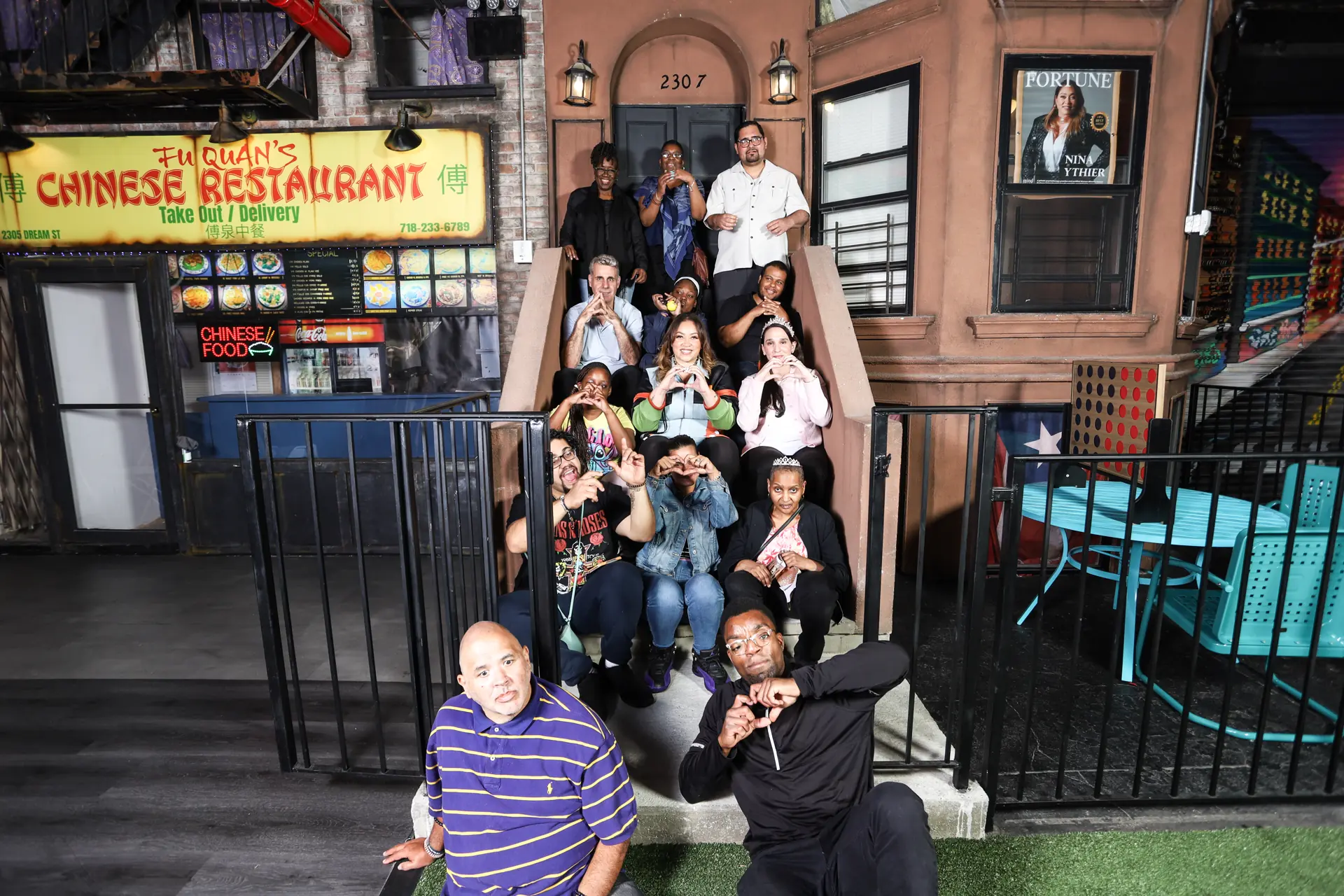
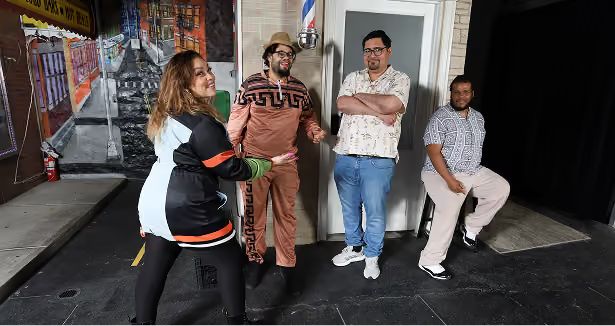
Mind Speak therapists have no offices — by design. We meet you in parks, cafés, day programs, schools, and homes across New York City and Westchester County. You bring yourself. We bring the rest

Individual Psychotherapy
Every person carries a different story. Our individual therapy sessions are built around yours — not a template, not a protocol. We take the time to understand who you are, what you're navigating, and where you want to go, then build a care plan around that.
We specialize in supporting people with intellectual and developmental disabilities alongside mental health conditions — a combination most practices aren't equipped to handle. You don't have to choose between one kind of care or the other.
Our therapists take a holistic view — considering emotional, psychological, and practical dimensions of your life together. Feeling heard and understood isn't a side effect of therapy here. It's the foundation.
Person-centered care — sessions built around your story, goals and pace, not a template
Community-based sessions — your home, neighborhood, day program, school, or wherever you're most comfortable
Goal-oriented approach — therapist and client work together to set clear, meaningful goals and track real progress toward them
Emotional support and validation — a consistent, non-judgmental relationship where what you bring to each session matters
Skill-building focus — coping tools, emotional regulation, and interpersonal skills that stay with you between sessions
Flexible scheduling — no rigid office hours; sessions adapt to your routine, not the other way around

Family Psychotherapy
When one person in a family is navigating a disability or mental health challenge, the whole family navigates it together. Family therapy creates a structured space for that shared journey — one where every member's experience is heard, and the family unit grows stronger through it.
We work with families of all compositions and backgrounds, with particular depth in supporting families that include a member with intellectual or developmental disabilities. We provide the insights, language, and coping tools that help families understand what they're dealing with — not just manage it.
Our approach is inclusive and non-judgmental. There's no model family here. What matters is that every person in the room feels they belong in it.
Collaborative healing — every member plays an active role; healing in a family is never just one person's work
Understanding dual diagnoses — education and context for families navigating intellectual disabilities alongside mental health conditions
Communication tools — practical strategies for difficult conversations, conflict resolution, and rebuilding trust
Coping strategies — resilience, patience, and adaptability developed as a family unit, not just as individuals
Caregiver support — dedicated attention to the emotional weight carried by legal guardians and full-time caregivers
All family structures — welcomed — diverse compositions, backgrounds, and relationships respected without judgment

Couples & Marriage Therapy
Relationships are hard. Ours is a space to work through the hard parts — without judgment, without sides, and with a therapist who understands that intimacy and connection look different for every couple.
We're experienced supporting couples where one or both partners live with intellectual disabilities or mental health conditions — a reality most therapists aren't prepared for. We are. Every session is tailored to the specific dynamics of your relationship, not a generic couples therapy model.
Beyond resolving immediate issues, couples therapy here includes real relationship education — learning what healthy dynamics look like, how to set and honor boundaries, and how to build a partnership that holds up over time.
Tailored approach — every couple's circumstances are distinct; sessions address your specific concerns, not a template
Confidential, judgment-free — a safe space for both partners to speak honestly without fear of criticism
Communication skills — tools to express needs, set limits, and genuinely hear each other
Emotional connection — rebuilding and deepening the bond between partners through empathy and shared understanding
Conflict navigation — practical strategies that transform disagreements into growth rather than damage
Disability-affirming — specialized support for couples where one or both partners are navigating dual diagnosis

Group Psychotherapy
There's something that happens when people realize they're not alone in what they're carrying. Group therapy creates that moment — and builds on it. Our groups bring together individuals with shared experiences to form a network of understanding that extends well beyond any single session.
We offer groups tailored to people living with intellectual disabilities and mental health conditions — from anxiety and depression support to life skills and social connection. Every group is guided by an experienced therapist and designed to be a safe, structured space for growth.
Group therapy also addresses one of the most persistent challenges in this population: isolation. The connections formed in a well-run group don't stay in the room — they become part of how people move through the world.
Inclusive community — a genuinely safe space where diverse backgrounds, abilities, and experiences belong
Mutual support network — real connections that reduce isolation and build a lasting sense of belonging
Social and communication skills — guided practice in expressing, listening, and engaging in a low-pressure environment
Emotional regulation — learning healthy coping mechanisms by observing and sharing strategies with others
Destigmatizing by design — shared experience normalizes what others have made feel shameful or isolating
More accessible — high-quality, therapist-led care at a lower cost than individual sessions
Serving NYC & Westchester since
zero offices
We come to you every single time
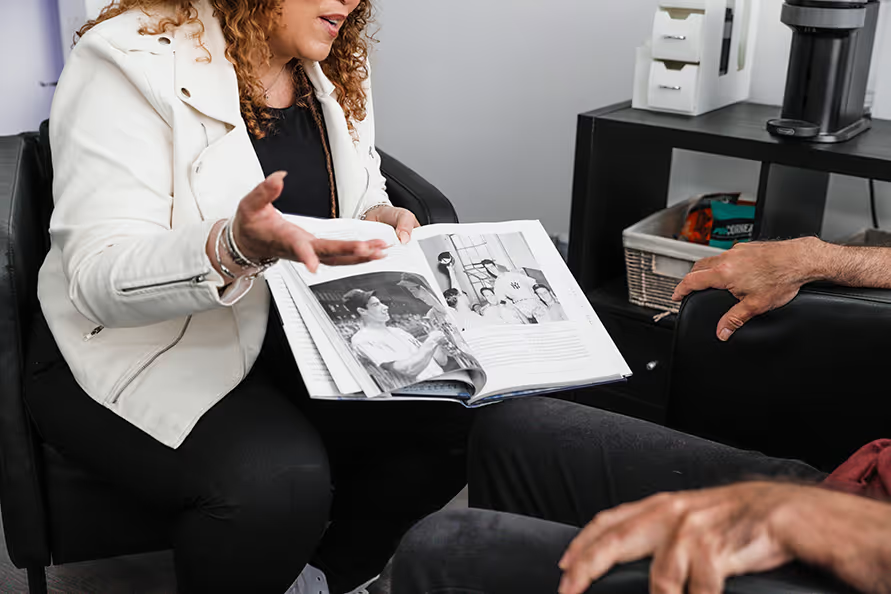
Cognitive Behavioral Therapy (CBT)
CBT is one of the most evidence-backed therapeutic approaches available — and in the hands of clinicians who know how to adapt it for people with intellectual and developmental disabilities, it becomes genuinely powerful.
It's not about positive thinking. It's about identifying the patterns in your thinking and behavior that make life harder than it needs to be, then building real skills to shift them.
Evidence-based — grounded in decades of clinical research on what actually works
Adapted technique — modified to be genuinely accessible for people with intellectual disabilities
Effective for anxiety and depression — the conditions most common in our population
Practical tools to use between sessions, so progress doesn't pause when you leave

Holistic Wellness Treatment
Mental health doesn't exist separately from the rest of who you are. Our holistic approach looks at the whole person — emotional, psychological, physical, social — and builds care that addresses all of it together.
This means integrating mindfulness, lifestyle, and behavioral approaches alongside clinical psychotherapy. How you sleep, who you're connected to, how you move through your day — it all matters, and we treat it that way.
Whole-person care — mental, emotional, physical, and social well-being treated as one
Mindfulness & grounding — practical awareness practices clients can use on their own
Lifestyle and environment — sleep, routine, connection, and community factored into treatment
NYC parks and spaces — sessions in nature and community settings wherever it helps

Crisis Intervention
When things reach a breaking point, you need someone who can actually show up — not a hotline, not a form. Mind Speak's crisis intervention is real, in-person support designed to stabilize, contain, and create a clear path forward.
Our therapists are trained in crisis response for people with intellectual and developmental disabilities, where crisis looks different and demands a specialized, patient approach.
In-person, real support — not a referral, not a hotline, not a form
Disability-informed response — a patient, specialized approach for people with intellectual and developmental disabilities, where crisis often looks different
Family and caregiver included — everyone in the circle gets support and clarity
A plan forward — crisis response is the beginning; we don't stop at stabilization
(914) 297-9998

Advocacy Services
Therapy heals. Advocacy protects. Mind Speak does both. When individuals with disabilities navigate systems — housing, education, healthcare, legal rights — they often face barriers no one prepared them for. We go into those spaces with them.
We work on individual, community, and policy levels. And for caregivers and legal guardians carrying the weight of advocacy alone: you are not alone in this. We've got your back.
Individual rights protection — dignity, respect, and access to what every person deserves
System navigation — removing barriers to mental health services, education, and community resources
Community inclusion — working toward environments where people with disabilities genuinely belong
Policy & legislative engagement at the systemic level — for lasting, structural change

Psychosexual Assessments & Counseling
People with intellectual and developmental disabilities are too often excluded from support around sexuality, identity, and relationships — as though these parts of life don't apply to them. They do. And this is a space where they're taken seriously.
Our therapists bring the same clinical depth and respect here as to every other service — with assessments and counseling shaped around the full context of who each person is.
Individualized assessments — shaped around each person's specific background and circumstances
Education & autonomy — supporting informed decisions and healthy, self-determined relationships
Completely confidential — dignity is the baseline, not the aspiration
Ready to rise above society’s stigmas and start living your best life?
Let us know more about you
Complete our secured form with details about you, your medical history, goals, and experiences
Talk to an advocate
We’ll match you to a passionate and experienced certified, licensed therapist to begin your journey.
Get customized care
Get a customized and flexible treatment plan that works with your existing life plan and team with your future in mind.
What Our Clients Say
Talking to my therapist helps me feel less alone, she really understands me.
Before going to therapy, my life was a mess—I was constantly losing my temper, getting into trouble at home, work and school and felt miserable without any hope. Since I started therapy, I have learned a lot about myself and have found a better way to deal with my feelings. My therapist also helped me to improve my confidence and supported my independence.

I have worked with a few therapists over the years, and I have not met one that works with me the way she has—she is my favorite.
My name is Samantha and I have a 6-year-old daughter that means the world to me. My therapist has helped me change my life completely and being in therapy has made me a better woman and mother. I feel like anyone would be lucky to have a therapist like the one that I have. I say this because she truly cares about me, is patient and encouraging, consistent, respects my privacy, helps me grow and really listens to me.

Talking with my therapist is like speaking with an old friend and I always look forward to our sessions.
Not only does she support me with my mental health, but she also helps me in other areas of my life that improves my life overall. She is a true professional and someone I can really count on because she always keeps her word—that is hard to find nowadays.

I don’t know how I would have done this without the help of my therapist.
I used to be depressed all the time and even spent time in a hospital for depression a few years ago. I am so proud of myself for how far I have come in therapy—I am not depressed anymore. I have changed for the better and even my friends and family have noticed a difference in me.

Mind Speak Inc has always cared about improving quality of life for the individuals and families that they serve and that is why I will continue to collaborate with them and refer my clients.
I highly recommend referring people who are looking for counseling services to Mind Speak Inc.--they respond very quickly, are very knowledgeable and helpful and are easy to work with as part of a treatment team. They are great advocates and always go above and beyond to make sure that the people that they are supporting are well taken care of.

Got questions?
give more clarity


Yes. We understand the challenges guardians and caretakers face. We offer collaborative, group, and family counseling for guardians of anyone in our active cases. You are not alone in advocating for rights and services — we've got your back.
No referral is required. You can reach out directly by phone, email, or our intake form. We receive referrals from many sources, but anyone can contact us directly.
All sessions are conducted onsite — at your home, group home, school, day program, or another community location. This eliminates the need for transportation and has proven highly effective for mental health and behavioral outcomes.
We accept Medicaid, Medicare, and most major managed care plans, including Amerigroup, Fidelis, Healthfirst, MetroPlus, United Healthcare, VNS Health, WellCare, Empire BlueCross BlueShield, and Aetna Better Health. Contact us if you don't see yours — we'll verify.
Absolutely. While we specialize in dual diagnosis, we warmly welcome anyone who needs mental health support. Our specialization is our strength, not our limit.

Nos hablamos en español, también.
Nuestros servicios están disponibles en inglés y español, porque el apoyo debe sentirse como en casa.
There's no wrong way to reach out.
Whether you're ready to begin or just figuring out if we're the right fit — we're here for that conversation. No intake paperwork, no commitment required to ask a question. There's no wrong door at Mind Speak.